


Second hand tractors are the core operating vehicles for mainline logistics, port short haul, factory area short haul, and urban building materials transportation. They are divided into two categories on the market: pure electric new energy tractors and traditional diesel tractors. There are huge differences between the two in terms of range, load capacity, energy replenishment conditions, operating costs, vehicle condition testing standards, applicable working conditions, and residual value preservation. Many fleets and individual car owners only look at the vehicle quotation when choosing, ignoring core conditions such as route, charging facilities, and annual driving mileage, which can easily lead to operational losses, annual inspection restrictions, high battery maintenance costs, and insufficient transportation capacity.
A legitimate second-hand car platform has established an independent testing system for two types of vehicles. Diesel vehicles focus on engine, chassis, and exhaust system testing, while new energy tractor vehicles focus on verifying the health of the three electric systems and batteries. Only by combining their own transportation scenarios, site facilities, and budget cycles can suitable vehicle models be accurately selected. Below, the two types of second-hand tractor vehicles are fully distinguished from four dimensions: core differences, working condition matching, vehicle condition inspection, and cost accounting. Firstly, the basic performance and core inherent differences between the two types of vehicle models are sorted out. Second hand diesel tractor is equipped with diesel internal combustion engine, which has a light weight, no battery occupying chassis space, and a higher compliant effective load capacity. The single full fuel range can reach 800-1200 kilometers, and the national gas station network is fully covered. It can complete refueling and energy replenishment in 5-8 minutes, without being limited by routes or regions; The power output is linearly stable, and it can operate stably in mountainous areas, plateaus, and low-temperature remote areas. The maintenance network is spread throughout urban and rural areas, and the universality of accessories is strong. The second-hand market has a large circulation volume and a higher residual value retention rate. The only shortcoming is the high cost of diesel energy consumption, which requires regular replacement of engine oil, filter elements, and urea. DPF particulate filters are prone to blockage and failure, and traffic is restricted on environmentally controlled roads in urban areas.
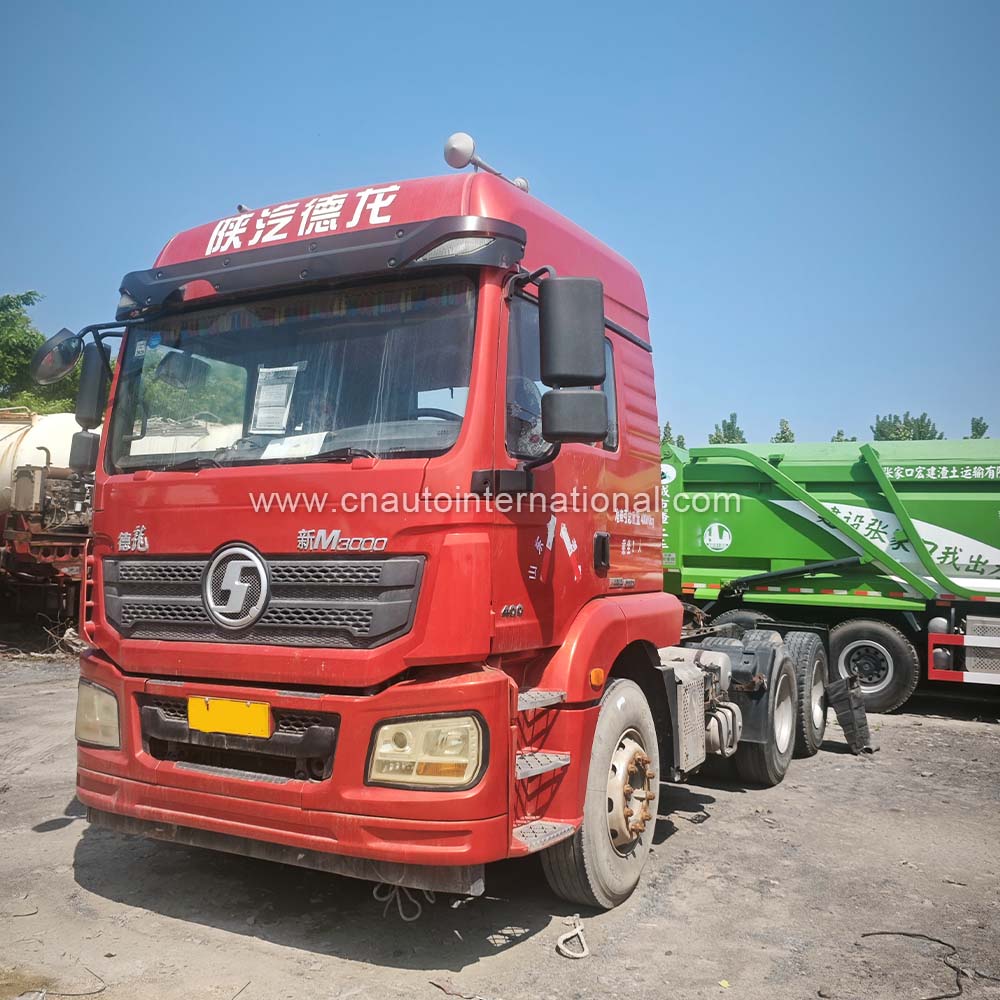
The second-hand new energy pure electric tractor relies on the power battery, motor, and electronic control system to drive. The motor outputs a large torque at the moment of starting, and is suitable for frequent start stop working conditions in ports and factories. It has low operating noise and zero exhaust emissions, and can freely enter urban areas, environmental protection parks, and enclosed construction sites to enjoy the Green Pass policy. The electricity cost per 100 kilometers is only one-third of that of diesel vehicles, and there is no oil, urea, or filter loss. The annual maintenance cost is much lower than that of diesel vehicles; The shortcoming is that the weight of the battery pack is relatively large, which reduces the effective load capacity by 2-3 tons compared to diesel vehicles of the same specifications. The single full charge range is concentrated at 200-300 kilometers, and fast charging and recharging take 30-60 minutes. It must be equipped with its own charging station or fixed battery swapping station. Long distance cross regional transportation has range anxiety, and the battery decay of second-hand models cannot be repaired. The cost of replacing batteries is extremely high, and the second-hand circulation channels are narrow. The three-year residual value is generally lower than that of diesel tractors. Secondly, the vehicle models are accurately matched according to the operating conditions, with fixed short distance closed scenarios (port container transfer, logistics park internal short distance transportation, urban waste and building materials short distance transportation, steel plant area transfer). The daily driving mileage is within 300 kilometers, the site can be self built with charging piles, and the valley electricity charging conditions are available at night every day. Second hand new energy tractors are preferred, and the annual driving mileage of more than 100000 kilometers can quickly offset the price difference between cars. The price difference between oil and electricity can save more than 100000 yuan per year, and is not subject to urban traffic restrictions; Cross provincial long-distance trunk logistics, national bulk cargo dispatch, transportation in mountainous and high-altitude areas, remote mining areas without charging facilities, and daily driving mileage exceeding 500 kilometers must choose second-hand diesel tractors. They have long endurance, convenient energy replenishment, sufficient load capacity, no endurance and charging constraints, and can flexibly adapt to various road conditions across the country; Mixed transportation between urban and rural areas, balancing long and short distances, and without fixed charging facilities on site, it is recommended to prioritize second-hand diesel tractors that meet the National VI standard, while also considering flexibility in traffic and compliance with emission standards.
The third distinction is the key points for checking the core condition of two types of second-hand cars. When purchasing a second-hand diesel tractor, the key points are to check whether the engine burns oil, leaks oil, and makes abnormal noises. Maintenance and accident records are retrieved to check the engine overhaul records. The main beam chassis is checked for cutting and welding deformation, the DPF post-treatment system is normal, the urea injection system is not faulty, and the registration certificate and operating certificate are checked to confirm that there is no mortgage sealing. At the same time, emission standards are verified. Priority is given to National VI vehicle models for urban traffic; Choose a second-hand new energy tractor core detection three electric system, read the battery BMS data through OBD diagnostic equipment, check the SOH battery health, if the health is below 80%, it means that the battery has severely deteriorated and the range has greatly reduced. Be cautious when starting, check the battery cell pressure difference, charge and discharge cycle times, whether there is a record of high temperature faults, visually inspect the battery pack for bumps, bulges, leakage, and water corrosion marks, measure the fast charging speed and actual range achievement rate, confirm that the motor and electronic control have no fault codes, and verify the remaining original factory warranty period of the battery. For electric separation models, confirm that the battery rental procedures are complete and can be transferred normally, and refuse accident trams that have been soaked in water or hit the battery pack.
The fourth comparison is to make purchasing decisions based on the full lifecycle operating costs. For short-term small-scale operations, with an annual mileage of less than 60000 kilometers and no fixed charging site, the comprehensive cost of second-hand diesel tractor is lower, the initial purchase budget is lower, and it is easier to resell the vehicle; Long term fixed line fleet, annual mileage of over 120000 kilometers, self owned charging stations, significant advantages in energy consumption and maintenance of second-hand new energy tractor, and lower total long-term operating costs; In terms of purchasing budget, the transaction price of second-hand diesel tractor in the same year is lower, and the second-hand price of second-hand new energy tractor is higher due to battery costs. However, the operation of GuDian can offset the price difference; In terms of residual value circulation, diesel tractor second-hand circulation is fast and stable, while new energy tractor is affected by battery decay, resulting in longer turnover cycles and higher discounts.
Finally, clarify the differences in policy adaptation between the two types of vehicle models. In first - and second tier cities, environmental control parks, and port restricted areas, new energy tractors enjoy the advantage of passage, while diesel National V vehicles are restricted from entering cities in many places; Overseas exports, long-distance transportation within counties, and construction sites in mountainous areas without environmental control zones make diesel tractors more adaptable and not subject to charging infrastructure restrictions.
Summary
The core judgment logic for selecting a used tractor is: short distance fixed routes, charging stations, and pursuit of low energy consumption costs. Choose a used new energy tractor; Long distance nationwide travel, no fixed energy replenishment facilities, heavy load and circulation preservation, choose second-hand diesel tractor. Before purchasing a car, priority should be given to relying on a legitimate second-hand car platform for a complete inspection report. Diesel vehicles should focus on checking the engine and post-processing, while new energy tractor vehicles should focus on verifying the battery health and three electric fault records. Combined with their own transportation routes, annual mileage, and site facilities, the full cycle cost should be comprehensively calculated to avoid high priced and low adapted car models, reduce operational risks, and improve transportation revenue.
FAQ
Q: Which is more cost-effective for short distance port transportation, second-hand electric tractors or diesel vehicles?
A: Fixed short distance and self owned charging stations at the port give priority to second-hand new energy tractors. Frequent start stop operations save significant energy consumption, lower long-term operating costs, and no restrictions on travel.
Q: What are the criteria for determining battery degradation in second-hand new energy tractor vehicles?
A: Using a device to read the health status of SOH batteries, a value ≥ 85% is considered a premium vehicle condition, while a value below 80% results in severe range degradation and is not recommended. At the same time, the battery status can be determined by testing the fast charging time of 20% -80%.
Q: Is it suitable for second-hand electric tractors to run long-distance trunk lines across provinces?
A: Not suitable, with a single range of only 200-300 kilometers, incomplete charging facilities along the way, low long-distance transportation efficiency, limited scheduling, priority given to National VI diesel tractor.
Q: What are the key components to check when purchasing a second-hand diesel tractor?
A: Check whether the engine has undergone major repairs, whether there is structural damage to the chassis, whether there is a DPF after treatment system, whether there is a urea system, and whether the emission standards meet the requirements of urban traffic restrictions.
Q: Can I buy a second-hand new energy tractor without a self built charging station?
A: Not recommended, public fast charging has high costs and long waiting times, which will greatly offset the energy consumption advantage of electric vehicles. Diesel tractors are preferred without fixed charging sites.
