


Second hand tractor is a core production tool in the logistics and engineering transportation industry. Compared with new cars, second-hand models have lower investment and faster cost recovery. However, the market is mixed with good and bad vehicles, such as meter tampering cars, overhauled accident cars, and mortgaged cars. Many individual car owners and small fleets only look at the appearance and price, ignoring the working conditions, three major components, and property rights procedures. After purchasing problematic vehicles, they frequently stop work for maintenance, which actually increases operating costs. This article summarizes a complete process for purchasing second-hand tractor from five major sections: pre planning, vehicle condition inspection, procedure verification, cost accounting, and scenario matching, to help transportation practitioners avoid pitfalls.
A、 Pre purchase planning: Lock the vehicle model according to transportation conditions
The first step in choosing a car is not to look at the source of the vehicle, but to determine the vehicle configuration based on its own operating route, load capacity, and road conditions, in order to avoid the mismatch between the vehicle model and the business.
Long distance mainline container transportation
Long term cross provincial highways, with a standard load of 49 tons, prioritize a 6 × 4 dual drive tractor with a horsepower of 430-550. The large displacement engine has stable fuel consumption during high-speed cruising and sufficient range. It is preferred to use retired high-speed mainline vehicles that operate at a constant speed for a long time with less engine wear.
Short distance factory and port transportation
Daily mileage within 300 kilometers, frequent start stop, optional short wheelbase dock tractor or lightweight 6 × 4 models; There are self owned charging stations, and second-hand electric tractors can be considered to significantly reduce daily energy consumption costs.
Heavy load transportation in mountainous and mining areas
For continuous long slopes and muddy bumpy road conditions, it is necessary to choose a vehicle with a high torque of 480 horsepower or more, equipped with engine brakes, and a reinforced rear axle design to avoid the mechanical wear and tear caused by long-term full load climbing of small horsepower lightweight vehicles.
Simultaneously confirm local environmental policies, prioritize national VI vehicle models in first and second tier cities and environmental protection parks; County level and remote construction sites can choose compliant National V vehicles, which have more advantageous procurement prices.
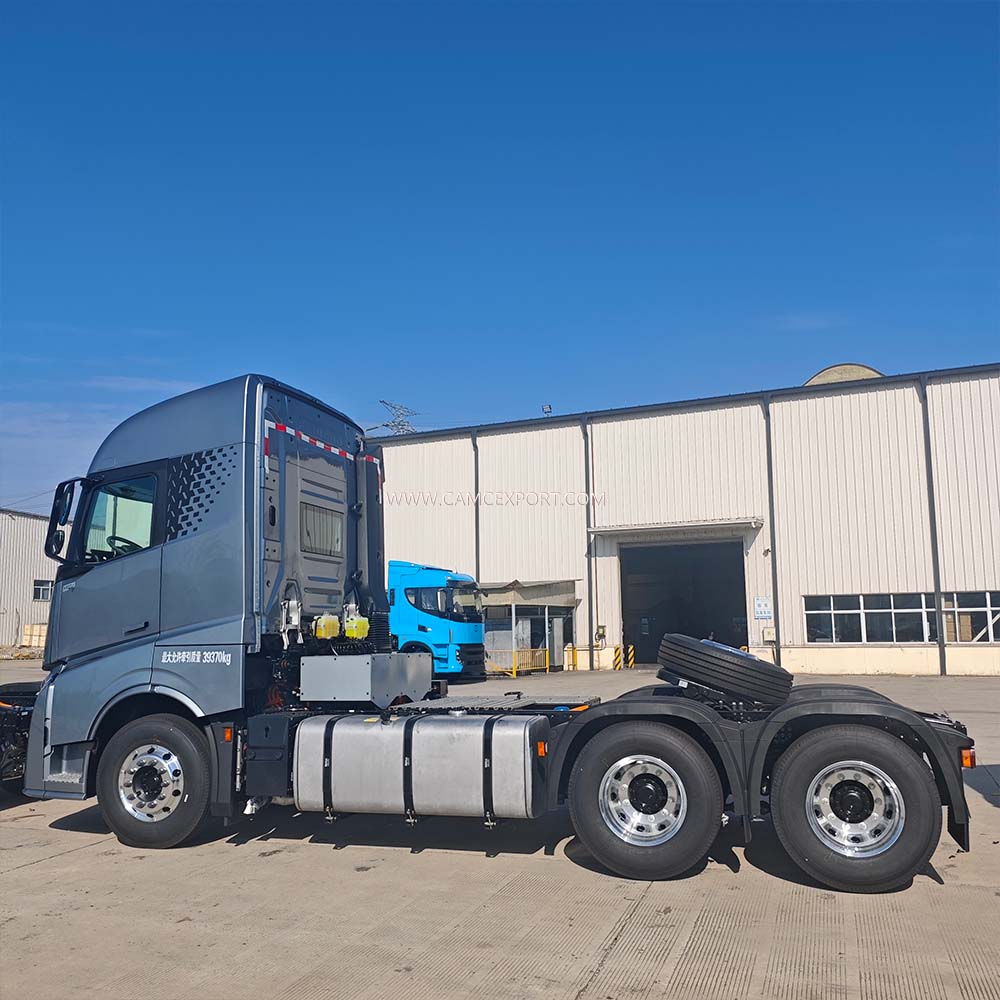
B、 Core vehicle condition inspection: focus on inspecting the three major components and chassis
The three major components and chassis directly determine the remaining service life of the vehicle and are of utmost importance in the inspection of second-hand tractor.
1. Engine inspection
Cold start test, normal vehicle ignition is smooth, without severe shaking, and there is no blue or black smoke in the exhaust; Check for extensive oil leakage and welding repair marks on the exterior of the engine block. Do not only look at the mileage on the dashboard, but require the platform to read the original running time of the ECU built-in. There is a common contradiction in odometer tuning cars where the interior and cylinder wear are severe but the displayed mileage is extremely low. Priority should be given to vehicles with complete maintenance records and regular replacement of oil filters.
2. Transmission and rear axle
On site road test, shifting status was tested under no-load and heavy load conditions, and there was no slipping or impact noise; There is no significant decline in climbing power, and there is no continuous abnormal noise or oil leakage from the rear axle after turning and reversing. Long term mining heavy-duty vehicles have faster differential wear, and priority is given to municipal and high-speed mainline vehicles at the same price.
3. Main beam and vehicle chassis
Carefully inspect the frame beam and traction saddle, and ensure that there are no cutting, fracture, or secondary welding repair marks; The steel plate spring and shock absorber have no fracture or deformation, and the tire wear is uniform. Self dumping and heavy-duty tractor beams are prone to stress cracks, and large-scale repainting is likely to cover up structural damage. Such vehicles should be avoided resolutely.
C、 Complete verification of procedures to eliminate property disputes
Complete procedures are the foundation for the normal operation and transfer of ownership of vehicles on the road. Lack of documents can lead to multiple risks such as seizure, inability to undergo annual inspection, and inability to file for export.
Firstly, verify that the registration certificate, driving license, purchase invoice, VIN code of the vehicle frame, engine stamp, and identification information are completely consistent, and confirm that the vehicle has no bank mortgage, court seizure, or theft records. Vehicles that have been transferred multiple times without maintenance records should be approached with caution.
Secondly, additional verification of the operating vehicle's operating certificate is required to confirm that there are no overdue or illegal delays; The plan to export overseas vehicle sources requires the platform to provide a complete export cancellation certificate and third-party inspection report to meet the customs clearance requirements of various countries.
Thirdly, a formal car purchase contract should be signed for the transaction, with white and black text indicating a commitment to no accidents, no odometer tampering, and no water or fire damage. Regular second-hand car platforms can provide short-term core component warranties, and offline private car sources without written warranties should be avoided as much as possible.
D、 Distinguishing power types: how to choose between diesel and electric tractor
There is a huge difference in the adaptation scenarios between the two powertrain models, so choose based on your own energy replenishment conditions.
Diesel used tractor: With full coverage of refueling stations, it has a range of 800-1200 kilometers and is not limited by location or route. It is suitable for nationwide bulk cargo and long-distance inter provincial transportation; The disadvantage is that the fuel cost is high, DPF、 The urea system requires regular maintenance.
Electric used tractor: zero emissions, no restrictions on driving, only one-third of the electricity cost per 100 kilometers for diesel vehicles, simple maintenance and no oil consumption; But a single range of 200-300 kilometers requires a fixed charging station, which is only suitable for fixed short distance routes in ports and factories. When purchasing a tram, it is essential to read the BMS data of the battery. It is not recommended to purchase a tram if the State of Health (SOH) of the battery is below 80%.
E、 Calculate the full cycle operating costs and compare prices rationally
Buying a car should not only compare the bare car price, but also comprehensively calculate the total cost of landing.
Short term operation, with an annual mileage of less than 60000 kilometers, can choose economical second-hand tractors with moderate age and good condition, and control the initial investment; Continuously running transportation all year round, with an annual mileage of over 120000 kilometers, I would rather spend more budget to purchase high-quality mainline vehicles to reduce losses from later maintenance shutdowns.
Minority discontinued brands have scarce spare parts and high maintenance premiums, prioritizing mainstream car models with large market holdings and multiple maintenance outlets; At the same time, budget is reserved for the replacement of vulnerable parts, annual inspections, and insurance. Low priced problematic cars may seem cost-effective, but later maintenance expenses will far exceed the price difference.
Summary
The core principles for purchasing a second-hand tractor are "determining the vehicle model based on working conditions, assessing the condition of the vehicle, ensuring complete procedures, and calculating the full cycle cost". Long distance trunk lines should choose high-powered 6 × 4 diesel vehicles, while closed short distance fixed routes can consider electric vehicles; Priority platform provides high-quality vehicles that have undergone comprehensive re inspection and complete maintenance records, avoiding issues such as odometer tampering, beam accidents, and incomplete procedures. By relying on a legitimate second-hand car platform to purchase a car, one can complete vehicle condition testing, transfer agency, and after-sales quality assurance in one stop, greatly reducing the risk of transportation practitioners stepping into pitfalls when buying a car and ensuring the stable operation of the fleet.
FAQ
How to distinguish whether a second-hand tractor has been tampered with?
It is not enough to only refer to the instrument mileage, but also to cross verify the original working hours of the engine through ECU reading, combined with the degree of chassis and interior wear.
What horsepower tractor should be selected for heavy-duty transportation in mountainous areas?
Suggest models with high torque of 480 horsepower or above, equipped with reinforced rear axle and engine braking, sufficient climbing power, and reduced mechanical wear and tear.
Is there no charging station suitable for buying a used electric tractor?
Not recommended, public fast charging has high costs and long waiting times, which cannot fully utilize the low-cost advantage of electric vehicles.
